
Karteikarten (8)
OCR-Text
Campagna, G.
Basilica del
Santo
S. Antonio
einen Jüngling
140562
12235
Extrahierte Daten
- Urheber:
- Cattaneo, D.u. Campagna, G.
- Ort:
- Padua, Basilica del Santo S. Antonio
- Titel:
- Der Hlg. Antonius erweckt einen Jüngling
- Material:
- –
- Kategorie:
- Skulptur / Italien
- Inv.-Nr.:
- 140562
- Fotograf:
- Alinari 12235
Kurzinventar · 1
- Herkunft:
- Florenz
- Zugangsart:
- –
- Datum:
- 1968
- Inhalt:
- (104)
- Anmerkung:
- in Klammer von Alinari
Geomatch - Verknüpfung mit Normdaten (Orte) · 1
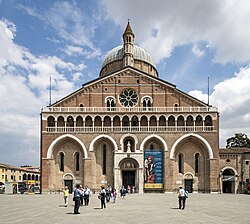
- Ort:
- Padua
- Region:
- Venetien
- Land:
- Italien
The candidate article 'Basilika des Heiligen Antonius (Padua)' explicitly matches the building name 'Basilica del Santo S. Antonio' and the location 'Padua', confirming it is the correct German Wikipedia entry for the specified basilica.
Verknüpfung mit Normdaten (Künstler) · 2
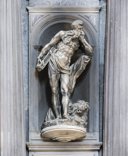
WM Didier Descouens · CC BY-SA 4.0
- Beruf:
- Bildhauer
- Beschreibung:
- Italian artist (1512-1572) (en) WD
- Wikidata:
- Q1080223
- ULAN:
- 500029294
- GND:
- 119383535
- VIAF:
- 95862450
- ISNI:
- 0000000115787510
- Wikipedia (en):
- https://en.wikipedia.org/wiki/Danese_Cattaneo
Danese Cattaneo (c. 1512? – 1572) was an Italian sculptor and medallist, active mainly in the Veneto region of Italy. Danese was of Tuscan origin, born in either Massa di Carrara or Colonnata. He produced primarily sculptures of religious and historical subjects and portrait busts. From an early age he was a pupil of Jacopo Sansovino in Rome, and left the city, as Sansovino and many other artists did, after the Sack of Rome (1527). In Sansovino's circle at Venice, he made a reputation in 1530 with his St Jerome at the base of the organ in San Salvador. He was invited to Padua in 1533 to take part in the stucco decorations for the Basilica of Saint Anthony of Padua. He also sculpted the sepulchre there of Alessandro Contarini, a Venetian general. Once again in Venice, he was part of the collaborative team providing architectural enrichments for Sansovino's great projects. In Venice, he sculpted the statue of Apollo over the well in the centre of the court of the Zecca. According to Giorgio Vasari, Danese composed the rich iconographic program himself: Apollo is a young man, sitting on a globe, his head radiant; in the right hand are metal rods, and in the left a sceptre, at the top of which is an eye. A serpent, with its tail in its mouth (ouroboros), encircles the globe. In the church of Sant'Anastasia of Verona, he sculpted a memorial to Giano Fregoso. He also participated in four statues for Doge Leonardo Loredan's monument in the Church of Santi Giovanni e Paolo. Giorgio Vasari owed many details of Venetian artists to conversations with Danese in his "Vite". He died in Padua in 1572. WP Wikipedia (en), Stand 15.10.2026 · CC BY-SA 4.0
- Hinweis:
- KI abgelehnt
Datenquelle: manuelle Erfassung Künstler · 1
- Künstler:
- Cataneo, Danese
- Gattung:
- Skulptur
- Nachweisland:
- Italien
- Nachweiszeit:
- 1514-1573
Maschinell aufbereitete Daten
- Kategorie:
- Skulptur
- Stadt (normiert):
- Padua
- Land:
- Italien
- Institution (normiert):
- Basilica del Santo, Sant'Antonio
- Haltende Institution:
- Basilica di Sant'Antonio
- Einrichtungstyp:
- Bau / in situ